
Design Smarter Dissolution Methods – from Study Setup to Special Scenarios
This masterclass aims to provide Pharmaceutical professionals with an advanced understanding of dissolution method development beyond mere regulatory compliance. Participants will explore strategic approaches to designing robust dissolution methods, optimizing analytical techniques, and interpreting dissolution data for formulation development and regulatory submissions. The course will also cover special study designs, including biorelevant and accelerated dissolution studies, to support product performance prediction and lifecycle management. By the end of the session, attendees will be equipped with practical knowledge to enhance dissolution testing strategies, troubleshoot challenges, and align methods with regulatory and scientific expectations.
#Pharmaceuticals/Biopharmaceuticals

Process Validation for Biotechnology Products
Manufacturing processes should be validated prior to initiate commercial manufacturing. Regulatory bodies expect that the manufacturer understand the process so that quality, safety and efficacy of the product are designed or built into the product through the appropriate control of
each manufacturing process steps. Today, process validation comprises three main steps: (1) Stage 1 – Process Design (FDA) or Process Evaluation (EMA); (2) Stage 2 – Process Qualification (FDA) or Process Verification (EMA); and (3) Continued Process Verification (FDA) or On-going
Process Verification (EMA). The training aims to provide deeper understanding on how process validation for biotechnological processes, which is the collection and evaluation of data from the process design stage through commercial production, would be appropriately designed and executed to establish scientific evidence that a manufacturing process is capable of consistently delivering quality product.
.
#Pharmaceuticals/Biotechnology

Analytical Method Validation and Verification
The objective of this course is to provide the participants with an overview on the performance characteristics (precision, accuracy, specificity, calibration model, detection and quantitation limit),
including changes and new recommendations in ICH Q2(revision 2), to gain a deeper understanding for practically relevant performance parameters, to learn how to design efficient and practically
relevant experimental validation and verification studies, to calculate suitable performance parameters, to learn how to optimise the precision of the reportable result by a scientifically based replication strategy, to learn how to derive suitable acceptance criteria, to get an overview on USP and Ph.Eur. General chapters on verification of compendial procedures, and on analytical transfer guidelines. Further, participants will receive an overview on the comprehensive revision of the USP General Information Chapter with some important interpretations of the ICH Q2 requirements,
with a holistic lifecycle approach.
#Pharmaceuticals/Biopharmaceuticals

Introduction to Pharmaceutical Stability Testing
The objective of this course is to provide the participants with a basic overview on factors
and mechanisms of changes/degradation, and on regulatory guidelines and expectations regarding the stability of pharmaceuticals across the lifecycle, from forced degradation (stress) studies in development, over stability data required for submission, to stability confirmation in the marked phase (on-going stability, changes). Possibilities to improve the efficiency of stability testing by bracketing and matrixing (reduced test design) and extrapolating the shelf-life are discussed, along with the risks to be considered.
#Pharmaceuticals/Biopharmaceuticals

Impurity Profiling in Pharmaceuticals
The objective of this course is to provide the participants with a basic overview on factors
and mechanisms of changes/degradation, and on regulatory guidelines and expectations regarding the stability of pharmaceuticals across the lifecycle, from forced degradation (stress) studies in development, over stability data required for submission, to stability confirmation in the marked phase (on-going stability, changes). Possibilities to improve the efficiency of stability testing by bracketing and matrixing (reduced test design) and extrapolating the shelf-life are discussed, along with the risks to be considered.
#Pharmaceuticals/Biopharmaceuticals

Data Analysis to Understand the performance of analytical procedures
The training content is designed to learn on how to design efficient and practically
relevant experimental validation, verification, and transfer studies, to calculate suitable performance parameters, to learn how to optimise the precision of the reportable result by a scientifically based replication strategy, to learn how to derive suitable acceptance criteria, to get an overview on USP and Ph.Eur. General chapters on verification of Compendial procedures, and on analytical transfer guidelines.
#Pharmaceuticals/Biopharmaceuticals
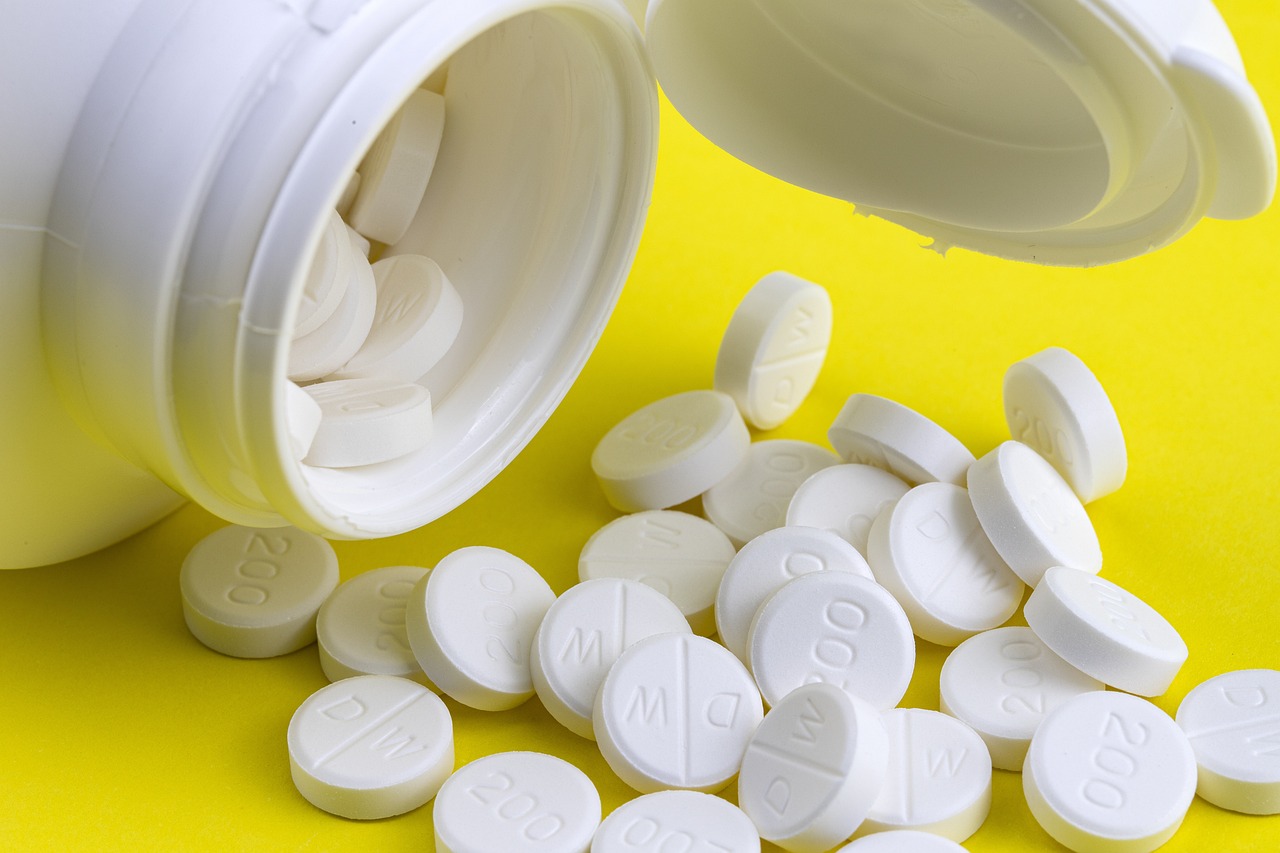
Granulation & Tabletting
The training content is intended to impart sufficient knowledge and understanding of the manufacturing process to enable the participants to be proficient in their work environment. This three-day course covers relevant information with regards to wet granulation, granule drying, the tableting process, the automation of the press, tablet fault finding, tablet defects, ancillary equipment, IPC testing, granule particle size testing, and scale up concerns.
#Pharmaceuticals/Biopharmaceuticals